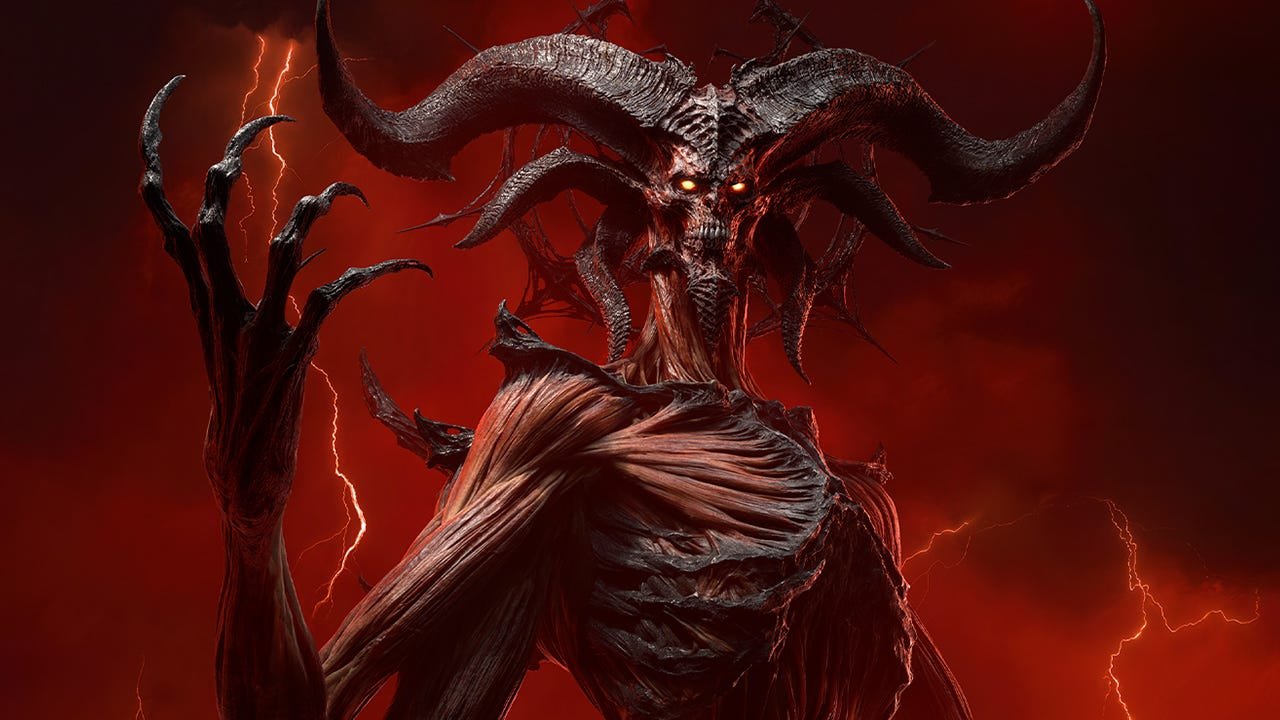

“Extending just isn’t about fixing, it’s about evolving.” Diablo IV: Lords of Hatred‘s Affiliate Sport Director Zaven Haroutunian says to me. “And if we do our job, they’re increasing and evolving in direction of fixing current issues. It is a win-win. I see our group as a heavy hitter in terms of this challenge. They function at a really excessive degree and have sufficient expertise to have the ability to do this.”
Diablo IV debuted three years in the past, and just like the groundbreaking motion RPG collection earlier than it, it has continued to evolve and increase ever since. From common seasonal updates and overhauls of current methods, to new actions and story-driven campaigns within the type of Vessels of Hatred. many.
With that in thoughts, Diablo IV’s second main growth, Lords of Hatred, would possibly sound just about the identical, albeit supercharged, on paper. There will not be one however two new courses, with the return of the fan-favorite sword-and-board-wielding Paladin and a brand new Warlock obsessive about demonology and apocalyptic fireplace. The motion then strikes to the Mediterranean-inspired historic Amazonian homeland of Skovos, with the perfect setting and all of the components to tackle Mephisto, the titular Head of Hatred.
However even with a well-received growth already within the works, and a number of other game-changing seasons including to and increasing upon the core expertise, Diablo IV: Lords of Hatred nonetheless stands out as essentially the most important replace to the sport since its preliminary debut.
Not solely does it carry an enticing and action-packed conclusion to the story, but it surely additionally modifications, updates, evolves, and touches virtually each a part of the sport. There’s a right away confidence right here, a way that the Diablo IV growth group is firing on all cylinders with a transparent understanding of what works and what’s wanted. Once more, this isn’t a repair, however evolve.
“Here is an instance,” continues Zaven Haroutunian. “After we add the Horadric Dice, it evolves and expands our crafting past anybody’s creativeness, however within the course of we additionally considerably improve the itemization system. With out the Horadric Dice, with out expansions like Lords of Hatred, we would not be capable of perceive it. And this is applicable to every thing from new talent bushes to struggle plans.”
Redefining the endgame one city at a time
The Diablo collection has at all times been a recreation in two halves, particularly in terms of latest titles. Here is a enjoyable pick-up-and-play motion RPG that places you in the course of a cinematic, story-driven battle between an angel in excessive heaven and a fiery demon in hell. And the opposite half is known as the endgame in trendy gaming terminology. Loot Monitoring. The thought is to place collectively extremely highly effective builds that make even essentially the most tough elements of the sport appear trivial. I do not imply it in a nasty method both. In Diablo IV, it is the sensation of being extra highly effective than any being or creature, no matter its dimension or the variety of horns and pointy elements on its carapace.
For Lord of Hatred, which started growth earlier than the discharge of the bottom recreation, the group knew early on that as a way to make the event occur, they wanted to combine these two elements and make it possible for one knowledgeable the opposite and vice versa. This can be an odd idea as these two elements are nonetheless very totally different. That mentioned, one of the best ways to clarify this method is to take a more in-depth take a look at how the group at Blizzard approached and designed the brand new Skovos area’s most important city known as Themis, a participant base. For endgame gamers, it is the last word hub.
“Making a metropolis in a Diablo recreation is at all times a ache, and that goes again to my expertise with Diablo III,” explains Zaven Haroutunian. “Historically, they’re one thing you create and sometimes find yourself serving the story. And so they are usually horrible deep into the endgame.”
“By the point we had been making Temis, the sport had matured,” Zevan continues. “All of us knew what made city, however we additionally knew what the marketing campaign wanted in that city. The marketing campaign does not care in regards to the actual location of the blacksmith. We determined very early on that the marketing campaign can outline the format of Themis, but it surely does not should. For us, that meant constructing elements of the town in areas that had been instanced for the marketing campaign. Themis is on prime of a mountain, in order that’s the place the motion RPG is available in. This made sense as a result of it might grow to be a hub for.”
“From day one, we knew Endgame was going to be an enormous focus,” Zaven says. “When you consider endgame, it isn’t only a pillar of the system and a pillar of the motion RPG aspect of ‘Blaster.’
Battle planning brings steadiness, focus, and context to the endgame
As growth started on Diablo IV: Lord of Hatred, the continued evolution of the dwell recreation influenced Lord of Hatred’s design in sudden methods. For instance, the sport’s Infernal Hordes exercise, a rogue-lite-style horde mode that added participant selection and company to the thought of heading off waves of enemies, was initially deliberate to be a part of the growth.
“All through the event of Lord of Hatred, the variety of actions different, however that is the right approach to describe it,” Zaven Haroutunian tells me. “A part of the rationale for that’s as a result of this mission was so lengthy within the making. We have been in some type of growth since earlier than the bottom recreation got here out, so it has been simmering for some time. And alongside the way in which, we ended up deploying some prototypes or issues in growth early. We had been like, horde mode can be cool, and the earlier we might ship it, the cooler it might be.”
And with Lord of Hatred’s launch simply across the nook, not solely has Horde mode been launched early for gamers, however while you add up all of the endgame actions, the record is lengthy and different. Nightmare Dungeon, Helltide, The Pit, The Tower, The Undercity, Hideout Boss, and so on. The unique plan for Lord of Hatred was to introduce an identical scale and scope to The Undercity, a serious new exercise launched in Vessel of Hatred.
“We have at all times had an virtually Skunkworks method of interested by issues which might be very helpful to the sport and customarily make sense,” Zevan provides. “Close to the top, what we had been left with was the thought of having one exercise, a model new capital ‘A’ exercise, and some smaller actions. And that ultimately turned Echoing Hatred. The thought was that this new large exercise would have a customization angle. Then, after I evaluated the sport scenario, I spotted that there have been 7 actions. Do you actually need an eighth one?”
Then the main target shifted after I realized that the sport did not want any extra exercise. “The sport wanted extra depth than breadth,” Zevan admits. “The sport was already large, so let’s make it as deep as doable.”
Previous to this revelation, the group knew Lord of Hatred would tackle structural points resulting from a lot current endgame exercise. So it is a approach to carry all of it collectively and reinforce the concept that its “endgame” design is geared toward each narrative and hardcore gamers. The credit roll, the large battle with Mephisto is over, and the Sanctuary is saved from whole destruction, however what occurs subsequent?For the primary time, gamers are given company and management because the survivors band collectively to immediately struggle the remnants of the demonic menace.
That is the place Battle Plans comes into play, a struggle desk the place gamers and Tyrael can strategize and plan battles contemplating Diablo IV’s varied actions. The mechanism is easy and might be described as a Diablo IV Spotify playlist. Gamers select the actions they need to interact in, creating an endgame circulation with narrative context and construction that was beforehand missing.
“At that time, we had been already bought on the playlist half[of War Plans]and we had been going to do it,” Zevan explains. “However that wasn’t sufficient. I believe there are additionally legitimate criticisms of the sport. It had all these actions, however they had been principally static. It was very straightforward to have interaction with and perceive, however there wasn’t a variety of depth. Not that they had been dangerous. However including exercise development allowed us to keep up the familiarity of the endgame, the place you possibly can simply get into Helltide or Nightmare dungeons. And the bushes imply that our core viewers, the hardcore gamers, the blasters, know that the endgame is for them too.”
“It was essential that the modifiers we added weren’t numerical,” Zevan continues. “There cannot be a 5% likelihood of this taking place. No, this modifications the way in which this exercise is performed. This provides Butcher to the Pit. Most individuals do not perceive this, however there may be one node within the Nightmare dungeon tree that claims it impacts all Treasure Goblins. And what meaning is each Goblin within the recreation. Nightmare Not each goblin within the dungeon. Each goblin within the recreation, regardless of the place they seem, might be modified by that node.”
Once more, we’re increasing the sport as we tackle the ache factors. And in terms of Battle Plans, it additionally stays true to Blizzard’s long-standing design philosophy or mantra: “Straightforward to be taught, laborious to grasp.” “There are seven actions. Arrange a playlist and let it play,” Zevan provides. “However as you get deeper into it, you begin studying the methods, you attain depth, you improve the problem, you begin enjoying round with modifiers. I can not wait to see the loopy issues gamers provide you with.”
New Talismans had been objects first, set bonuses got here later.
Maybe the largest and most notable addition to Diablo IV: Lord of Hatred for gamers placing collectively a construct is the Talisman system, which incorporates allure and seal tools. Introducing set bonuses to the core expertise whereas deepening itemization. This defining characteristic of Diablo 3 alone was a query that was at all times on the minds of groups and gamers alike. Does Diablo IV want set objects? And is it even doable given the sport’s current expansive itemization, which incorporates legendary, distinctive, and mythic objects? In any case, Charms wasn’t created to handle this query.
“The place to begin was quite simple: Can we improve the floor space wanted to permit gamers to optimize their gear, stats, and physique?” Zaven Harutyunyan remembers. “It is a very high-level drawback, and that is the place we begin doing these items. It wasn’t, ‘Oh, I need a whirlwind set.'” We’ve a normal mindset. In Diablo IV, every class has totally different pressures in terms of optimizing their stats and tools. We knew we could not simply preserve slamming extra stuff into the “paper doll.” That is what we name our tools, helm and armor elements. ”
Including a brand new layer was one thing that the Diablo IV group and hardcore gamers felt was obligatory, they usually additionally agreed that it should not overwrite or add to current methods within the recreation. It is a “paper doll”. So step one was to supply the allure with its personal customized stock, permitting the talisman to behave as a storage system. And that was all of the group was engaged on as a result of they wanted to know what they really did and what they added to the sport.
“So now we have a storage system known as a talisman, and that is the place we put our charms,” Zevan explains. “However then, for us, it was a battle to determine what the charms had been going to do and the way they had been going to be fascinating. From there we bought the SEALs, after which ultimately the units, however the interplay between these three was a really late addition. We had been having a tough time figuring that out. All the things is obvious and glued when the units are available in. You’ll be able to equip units, they usually have totally different numbers. I’ve a set of charms, and there are such a lot of “slots,” and the shields coordinate all of this. ”
“Many points that prevented the set from collaborating in Diablo IV have additionally been resolved,” Zevan added. “I consider Talisman as our builders are actually skilled and good at their craft and good at increasing issues the way in which expansions ought to do. We’re additionally fixing issues alongside the way in which. Lengthy-standing issues, severe issues.” And in step with the concept that the endgame is that this holistic factor, Talisman is launched within the opening of Lords of Hatred’s marketing campaign. It is a uncommon Horadric merchandise from a fallen ally to carry into the ultimate battle with Mephisto.
Revamped talent tree breathes new life into ever-growing courses
Going again to Diablo IV’s authentic launch, there was a way that the visible tone of that iconic movie’s launch signaled a return to the darkish fantasy of Diablo II, and that the core expertise would mix the depth of that groundbreaking second movie with the arcade-like, fast-paced fight of Diablo 3. And we noticed this by way of the sport’s talent tree system of playable courses, which mixed energy and customization.
“One of many issues we seen with talent bushes is that they serve a number of masters,” mentioned Zaven Haroutunian. “We had been attempting to supply customization and experimentation with two selections, the little twigs that the gamers known as them. However they had been additionally going to be a supply of energy. And also you see each of those in Diablo II and Diablo III. I characterize the Diablo II talent tree as empowering. You set factors into ranks, they usually go up, and synergies kind, they usually grow to be a supply of energy.”
“When you consider Diablo III, the entire rune system was a supply of customization and expression,” Zevan continues. “We had been attempting to mix these two collectively, but it surely simply did not work out. One of many issues we finally realized was that this could not be the first energy supply. So, in attempting to stay to the foundations of Diablo II, we had an preliminary respec price that went in opposition to the thought of talent bushes being a spot for personalization and expression.”
This respec price was one thing the group had been engaged on pretty early on within the seasonal replace, however Diablo IV: Lords of Hatred’s revamped talent tree represents an entire overhaul of the sport’s eight playable courses, together with a brand new paladin and warlock. It removes passive skills, i.e. small sources of energy, for good cause. Energy in Diablo IV comes from objects, tools, charms, runes, and extra. Notably with the brand new Talisman system, having a passive in a talent tree requires the merchandise’s quantity to be artificially elevated, leading to a comparatively weak or minor number of passives within the talent tree.
“Frankly, we had been inflating the numbers for gear as a result of we felt just like the talent tree system was messing with loot monitoring,” Zevan explains. “Then the dialogue turned, what would you like in a talent tree? Effectively, it does not should be a supply of energy. That is what objects are primarily there for. Which is extra enjoyable? You’ll be able to play the construct you do not need to do, and hope to search out objects that allow you to play the construct you need, or you possibly can create a construct utilizing the talent tree you need to play, discover objects, and enhance it. We imagine the second is extra enjoyable.”
Even an informal take a look at Diablo IV’s new talent tree reveals that it transforms the skills and abilities of each class within the recreation, providing extra selection and freedom to assist totally different playstyles. Which means along with the 2 new courses, all legacy courses have been reworked, improved, and prolonged.
“A whole lot of it’s simply repositioning,” Zevan added. “Be certain every thing is in the appropriate place to have the appropriate affect. Customise talent bushes. Use objects to unleash your energy. Crafting with the Horadric Dice. Talismans that carry depth. Each talent has choices and each class advantages from the work we have completed. We clear up issues as we replace each class within the recreation.”
“Throughout growth, we are sometimes confronted with fixing actual issues,” concludes Zaven. “And we do not at all times have the perfect answer proper in entrance of us. In actual fact, typically there isn’t any excellent answer. Usually you simply have to choose. It is solely while you take a step again from what you have completed that your perspective shifts and also you’re in a position to perceive the affect of your selections, each optimistic and unfavorable. Solely then can you actually see clearly what you have really completed.”
Sanctuary continues to be infested with demons, however the future is shiny
In Season 11 of Diablo IV, the group fully overhauled enemy conduct and the methods wanted to beat them, making every encounter really feel a little bit extra participating and totally different. Diablo IV: Lords of Hatred’s elementary modifications not solely construct on this, but additionally increase on this already well-received replace. This is only one instance of what foundational and game-changing updates can carry to a Diablo recreation.
It makes the acquainted really feel new, recontextualizes current methods, and expands participant selection and freedom to create their very own heroes, from what a gauntlet seems to be prefer to what colour most closely fits that specific weapon.
And, finishing the story Blizzard was attempting to inform with Diablo IV, and curiously, this new basis and “endgame” might additionally mark the top of a serious story-based growth for the sport, as Mephisto in wolf kind is the primary character we see or hear within the base recreation. The massive query of the place it goes from right here will clearly be a sizzling subject amongst gamers within the coming months, as Blizzard is not prepared to speak about the way forward for the sport within the brief or long run simply but.
However the preliminary consensus is that the group has achieved its authentic objective, and what’s fascinating is that followers are too busy enjoying and having fun with Lord of Hatred to even cease and take into consideration Sanctuary’s future. It is undoubtedly going to be brighter due to the evolution we have seen right here. As a result of, as Zevan summarized, “every thing is in the appropriate place” in the mean time.